The best iPhone 18 Pro Max screen protector for most people is a high-quality, clear tempered-glass protector with a precise model fit, an oleophobic coating, and a case-friendly design. It helps protect the display from everyday scratches and can provide an additional layer against some impacts.
If you regularly use your phone outdoors, consider anti-reflective glass. If you frequently read messages or work with sensitive information in public, a privacy screen protector may be a better choice.
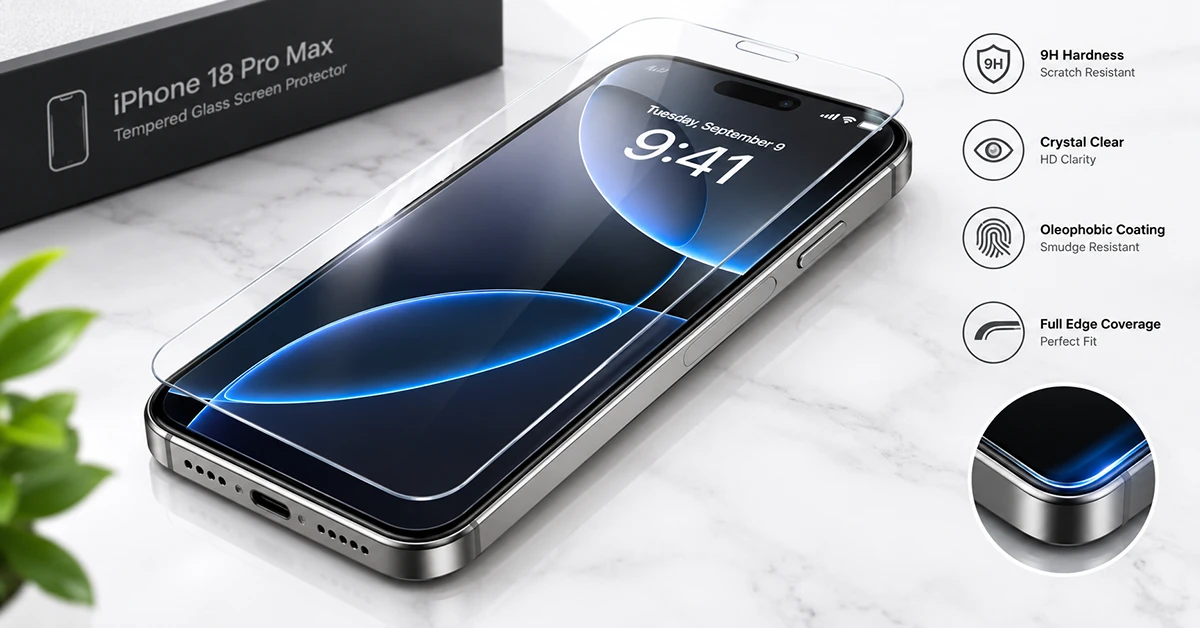
Before buying, confirm that the product explicitly supports the iPhone 18 Pro Max. Screen protectors designed for other iPhone models may have different dimensions, edge shapes, or sensor cutouts.
What Is the Best Screen Protector for iPhone 18 Pro Max?
The right choice depends on how you use your phone, how much you want to spend, and whether screen clarity, privacy, or glare reduction matters most.
| Screen protector type | Best for | Main consideration |
|---|---|---|
| Clear tempered glass | Everyday protection | Usually the best all-around choice |
| Privacy tempered glass | Public transport, offices, and travel | Can reduce brightness and viewing clarity |
| Anti-glare glass | Outdoor use and bright environments | Performance varies by coating and finish |
| Matte screen protector | Reducing reflections and fingerprints | May soften image detail |
| Flexible film or hydrogel | Slim protection and a different surface feel | Impact protection varies by product |
Our recommendation: Start with clear tempered glass if you want a balance of clarity, smooth touch response, and everyday scratch protection. Choose a specialized finish only if you have a specific need.
No screen protector makes a phone completely scratchproof or shatterproof. Results depend on the protector, installation, the type of impact, and the conditions of use.
Types of iPhone 18 Pro Max Screen Protectors
1. Tempered Glass Screen Protector
Tempered glass is a popular option because it feels similar to a bare glass display and offers a smooth surface for scrolling, typing, and gaming.
Look for a protector with:
- Clear viewing quality and minimal distortion.
- An oleophobic coating to help reduce fingerprints and oily smudges.
- Accurate alignment around the display edges and sensors.
- A compatible installation frame, if available.
- A design that works with your preferred phone case.
Tempered glass can absorb some damage by cracking or chipping itself, but it cannot guarantee that the original display will survive every drop.
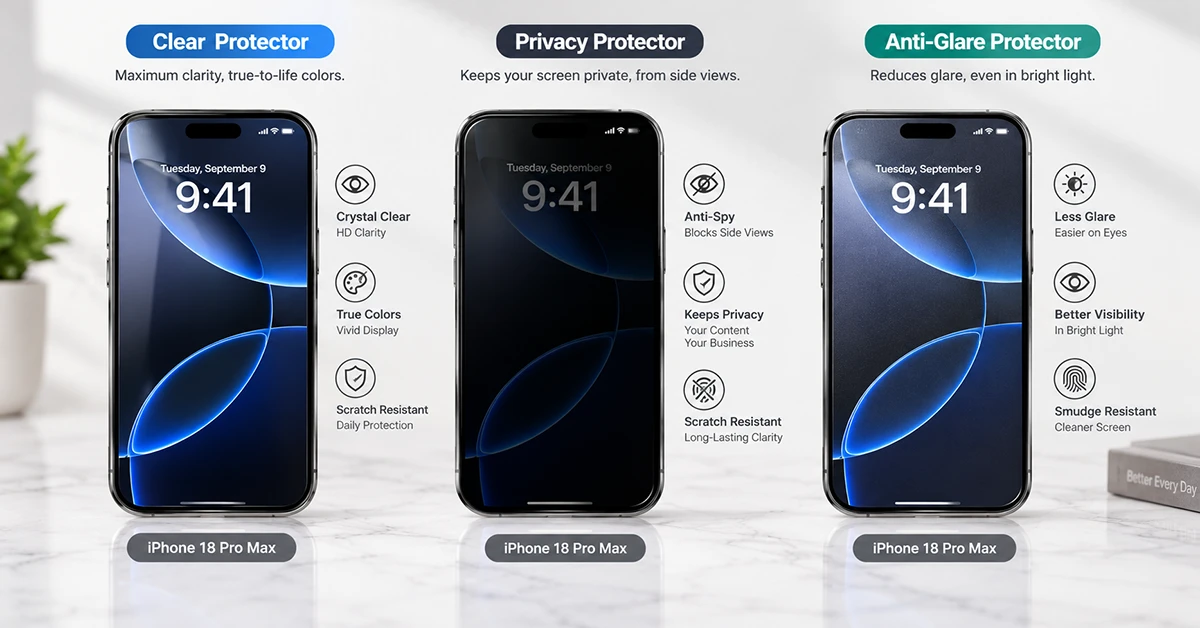
2. Privacy Screen Protector
A privacy screen protector restricts viewing from certain side angles, making it harder for people nearby to see your screen.
It can be useful when checking messages, accessing work documents, or using your phone on a bus, train, or airplane.
However, privacy glass often makes the display appear darker and can affect viewing angles or perceived clarity. You may need to increase brightness in some situations.
Choose privacy glass if confidentiality is more important to you than maximum brightness and wide-angle viewing.
3. Anti-Glare Screen Protector
An anti-glare protector reduces distracting reflections from sunlight, overhead lights, and other bright surroundings. It is worth considering if you regularly use your iPhone outdoors.
Anti-glare products are not all identical. Some use anti-reflective coatings to preserve a clear image, while matte finishes diffuse reflections across the surface.
Check product specifications and independent reviews before purchasing. Do not assume that every anti-glare protector offers the same brightness, color accuracy, or reflection reduction.
4. Matte Screen Protector
Matte protectors provide a less glossy surface and can make fingerprints less noticeable. Some users also prefer the feel of a matte surface when gaming or drawing.
The trade-off is that certain matte finishes can make text, photos, and fine details look less sharp. If you frequently edit photos or watch high-resolution video, clear glass may be preferable.
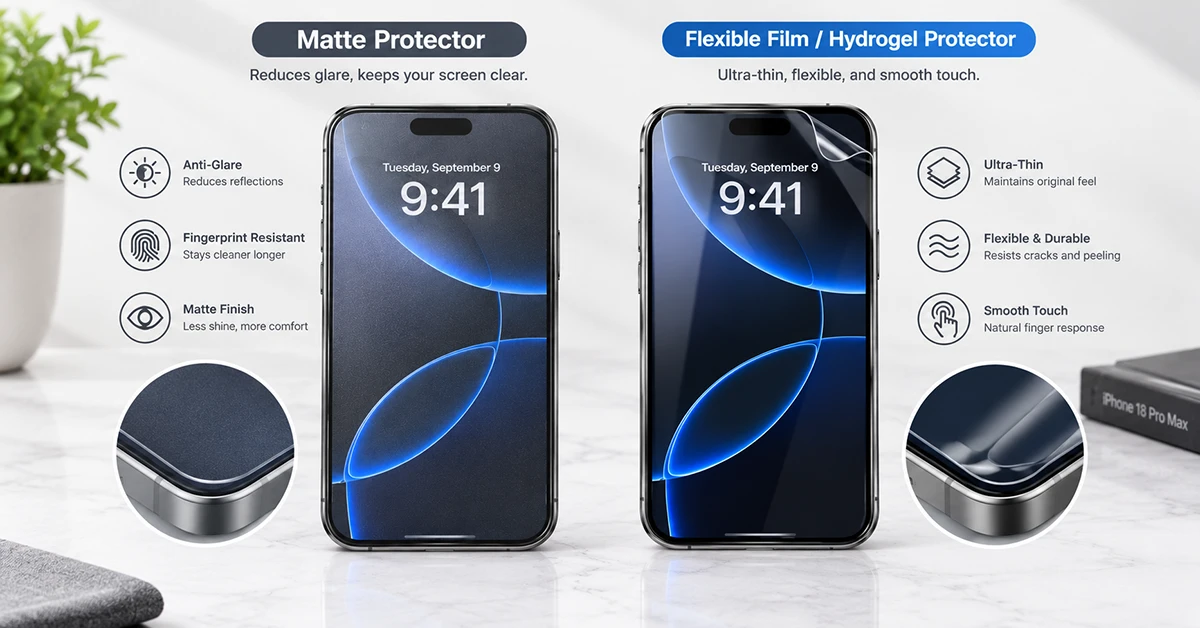
5. Flexible Film or Hydrogel Protector
Flexible films and hydrogel protectors are thin alternatives to glass. Depending on the product, they may be useful for light surface protection and a low-profile feel.
Their resistance to scratches, impacts, and wear varies by material and construction. Check the manufacturer’s specifications rather than assuming that a flexible film provides the same protection as tempered glass.
How to Choose the Right iPhone 18 Pro Max Screen Protector
Confirm Exact Model Compatibility
This is the most important step. Look for the exact name “iPhone 18 Pro Max” in the product title or compatibility list.
Do not assume that a protector for the iPhone 18, iPhone 18 Pro, or an earlier Pro Max model will fit correctly. Similar names do not guarantee identical dimensions or sensor placement.
Check Edge Coverage
A screen protector should cover the intended display area without interfering with the phone’s case.
Full-coverage designs can offer a more seamless appearance, while slightly narrower, case-friendly designs may work better with cases that wrap closely around the screen.
If you use a protective case, look for confirmation that the protector and case are compatible.
Look for an Oleophobic Coating
An oleophobic coating helps reduce the appearance of fingerprints and makes oily marks easier to wipe away. It does not prevent all smudges, and the coating may wear down with use.
Check whether the manufacturer identifies this feature and whether replacement protectors are available.
Consider Touch Response and Sensor Compatibility
A well-designed protector should allow normal touch interaction. If Face ID or other front-facing sensors are relevant to the model, check that the protector is specifically designed and tested for compatibility.
After installation, test touch response, face recognition, typing, and normal gestures.
Choose a Practical Installation Kit
An alignment tray can make installation easier by helping position the glass accurately. A useful kit may also include a cleaning wipe, microfiber cloth, dust-removal sticker, and instructions.
These accessories can reduce installation errors, although they cannot guarantee a completely bubble-free result.
How to Install Screen Protector Without Bubbles
A clean environment and careful alignment are essential for a smooth installation.
Step 1: Prepare Your Workspace
Choose a clean, well-lit room with minimal airborne dust. Wash and dry your hands, then remove the phone case and any existing screen protector.
Step 2: Clean the Display
Use the cleaning materials supplied with the protector. Wipe away fingerprints and oil, then use the microfiber cloth to remove remaining marks.
Inspect the screen under bright light. Use the dust-removal sticker to lift any tiny particles. Even a single speck can create a visible bubble.
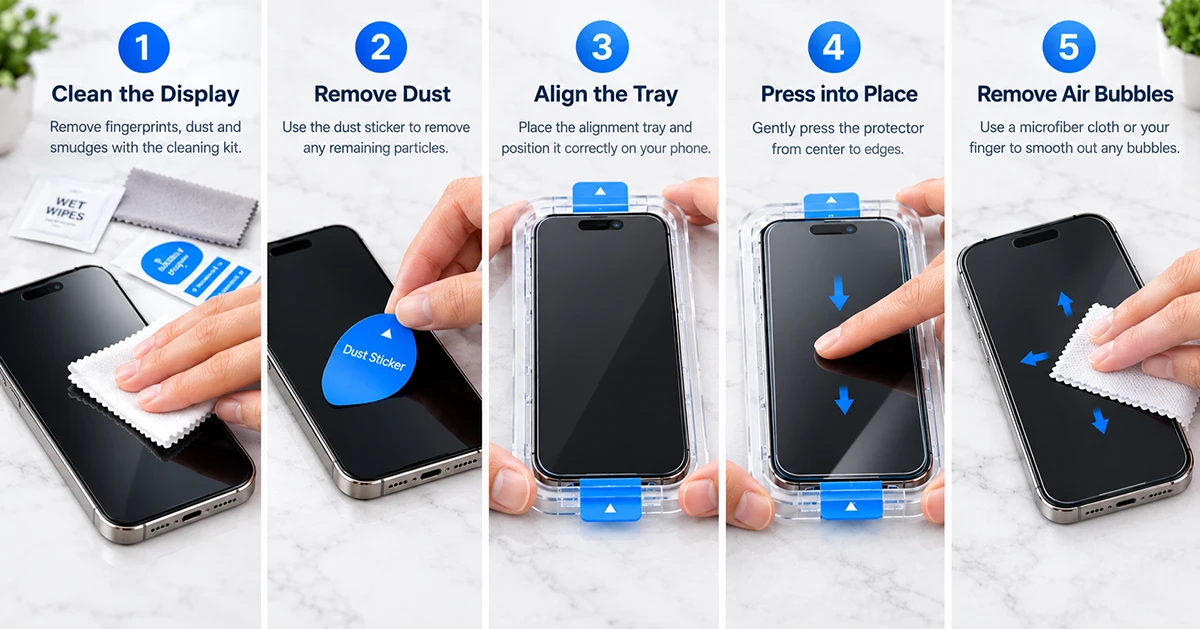
Step 3: Align the Protector
If the package includes an alignment tray, place it on the phone according to the instructions. Otherwise, carefully align the protector with the display edges and relevant cutouts before allowing it to make contact.
Avoid touching the adhesive side.
Step 4: Apply the Glass
Lower the protector gently onto the screen, following the manufacturer’s directions. If it uses a self-adhesive layer, allow the adhesive to spread naturally rather than pressing down unevenly.
Step 5: Remove Air Bubbles
Use a clean finger or the supplied tool to guide trapped air toward the nearest edge, applying gentle pressure.
If a bubble remains directly over a dust particle, follow the manufacturer’s instructions for lifting and correcting the protector. Avoid repeatedly peeling the glass back, which can introduce more dust or damage the adhesive.
Step 6: Test the Phone
Check the screen for bubbles, lifted corners, and trapped dust. Test touch response, Face ID, and the fit of your phone case before finishing.
If the protector lifts at the edges after the case is installed, remove the case and check compatibility rather than forcing the protector down.
Do You Need a Screen Protector for your iPhone 18 Pro Max?
A screen protector is optional, but it can be worthwhile if you want an additional layer of protection against everyday scratches and some impacts.
It is especially useful if you carry your phone in busy environments, frequently place it on different surfaces, or want to preserve its condition for resale.
If you prefer the original screen feel, you can use the phone without a protector and take care to avoid abrasive particles, hard impacts, and contact with other objects. A suitable protective case can also help, although it does not eliminate screen-damage risk.
Remember that a screen protector and a protective case serve different purposes. Using both can provide more complete everyday protection.
Frequently Asked Questions
What is the best screen protector for iPhone 18 Pro Max?
For most users, clear tempered glass with an oleophobic coating, accurate model fit, and case-friendly edges is a sensible starting point. Privacy and anti-glare versions are better for specific needs.
Does a screen protector affect Face ID?
A compatible, properly installed protector should be designed to work with the phone’s front-facing sensors. Choose one explicitly tested for the iPhone 18 Pro Max and verify Face ID after installation.
Is privacy glass better than clear tempered glass?
Neither is universally better. Privacy glass helps limit side-angle viewing, while clear glass generally preserves a brighter, wider viewing experience.
Can I use an iPhone 17 Pro Max screen protector on iPhone 18 Pro Max?
Do not assume compatibility based on the model name. Use an older protector only if its manufacturer explicitly lists both devices as compatible.
Final Verdict
The best iPhone 18 Pro Max screen protector depends on your priorities. Choose clear tempered glass for everyday use, privacy glass for public settings, or anti-glare protection for frequent outdoor use.
Before ordering, confirm exact model compatibility, check case fit, review the coating and installation kit, and read the warranty terms. A well-fitted protector installed carefully is a practical way to help keep your display in good condition.
