Taking a screenshot on the iPhone 18 is fast — but with iOS 27, Apple has added a few new wrinkles you should know about. Whether you just unboxed an iPhone 18 Pro or you’re waiting for the standard iPhone 18 arriving in spring 2027, this guide covers every method: the classic button combo, Back Tap, Siri, and full-page scrolling captures.
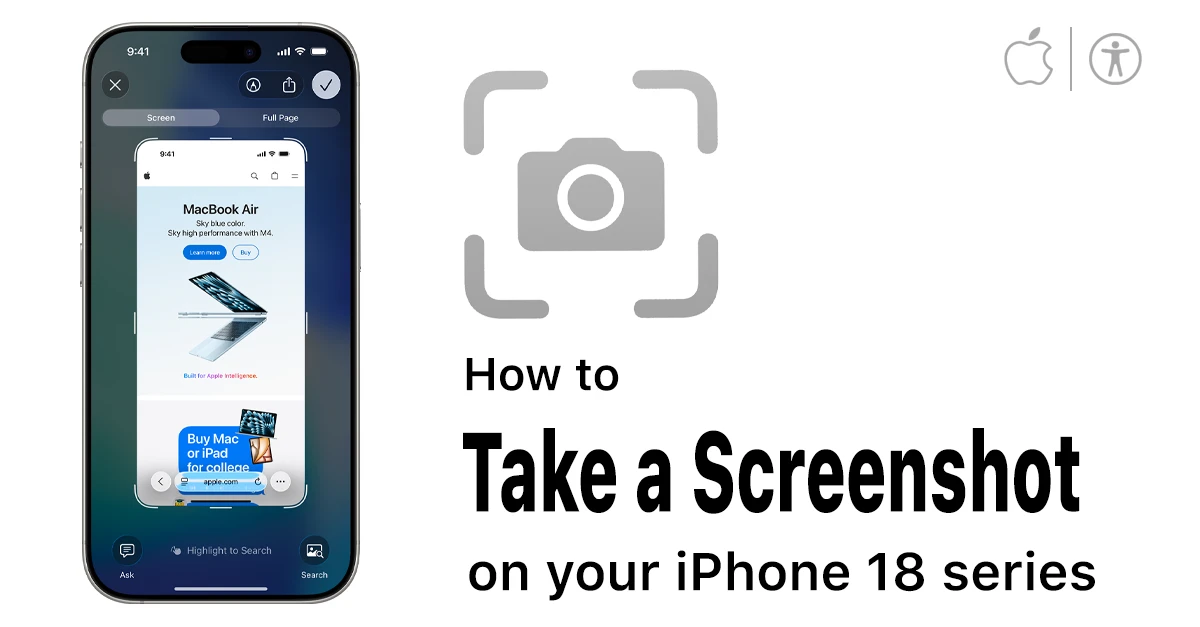
Method to Take a Screenshot on your iPhone 18
The iPhone 18 offers more ways to take a screenshot than any previous iPhone—from the reliable button combo to Back Tap, AssistiveTouch, Siri, three-finger gestures, and even head tracking.
The Back Tap method is the one most users end up adopting as their daily driver, simply because it’s faster and doesn’t require reaching for buttons.
The Fastest Way: Side Button + Volume Up
This works on every iPhone 18 model, including the iPhone 18 Pro and iPhone 18 Pro Max.
- Open the screen you want to capture.
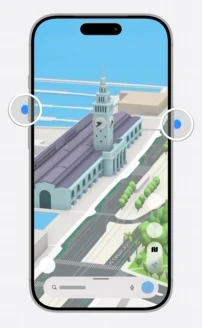
- Press the Side button (right edge) and the Volume Up button (left edge) at the same time.
- Release both buttons quickly. If you hold them too long, you’ll trigger the power-off / Emergency SOS slider instead.
- You’ll see a flash and hear the camera shutter sound (unless your iPhone is on silent).
Why does my screenshot sometimes not work? The #1 mistake is holding the buttons instead of a quick press-and-release. The second most common issue is pressing Volume Down by accident.
New in iOS 27: After taking a screenshot, it appears as a full-screen preview with Markup and Visual Intelligence tools along the bottom — not the small corner thumbnail you’re used to from iOS 18. You can switch back to thumbnail view in Settings → General → Screen Capture by toggling off Full-Screen Previews.
Method 2: Full-Page Screenshots (Capture an Entire Webpage)
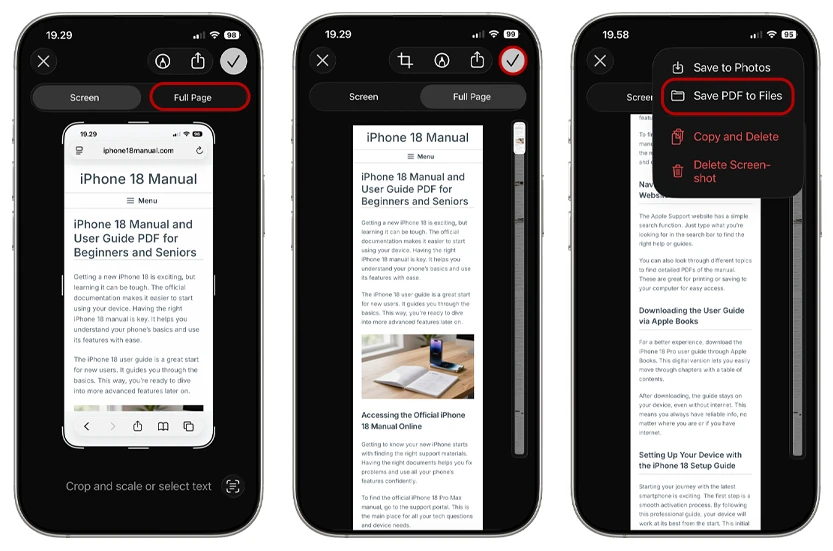
Need to save a long article, email thread, or recipe instead of just what’s on screen? iOS handles this natively. Take a screenshot using the method above.
- In the preview, tap Full Page.
- Scroll the right-hand preview to check the entire capture.
- Tap Save PDF to Files to store it as a document, or Save to Photos to keep it as an image.
This works in Safari, Mail, Notes, and most Apple apps — no third-party apps needed.
Method 3: Screenshot with Back Tap (No Buttons at All)
If you take screenshots constantly, Back Tap is the fastest method — just double- or triple-tap the back of your iPhone.
How to set it up:
- Open Settings → Accessibility → Touch → Back Tap.
- Choose Double Tap or Triple Tap.
- Select Screenshot from the list.
Now a quick double-tap on the back of your iPhone 18 captures the screen instantly — perfect one-handed on the larger Pro Max.
Method 4: Ask Siri
Hands full? Just say “Hey Siri, take a screenshot.” Siri captures the screen immediately — the most accessible option if you have limited mobility.
Method 5: Three-Finger Gestures
iPhone 18 supports three-finger screenshot gestures through Accessibility settings. There are two variants:
Option A: Three-Finger Tap
- Go to Settings → Accessibility → Touch → Touch Gestures.
- Find Three-Finger Tap and toggle it on.
- Select Screenshot as the action.
Option B: Three-Finger Swipe Down (iOS 17.4+)
- Go to Settings → Accessibility → Touch → AssistiveTouch → Custom Actions.
- Look for Three-Finger Swipe in the list.
- Assign it to Screenshot.
Once enabled, a three-finger tap or swipe captures your screen without touching any buttons.
Method 6: Head Tracking (iPhone 18 Exclusive)
The iPhone 18 introduces a genuinely novel accessibility feature: Head Tracking for screenshots. This allows you to capture your screen using facial gestures such as blinking or sticking out your tongue.
Setup:
- Go to Settings → Accessibility → Head Tracking.
- Toggle Head Tracking on.
- Choose a facial gesture (e.g., Eye Blink).
- Scroll down and tap Screenshot.
This feature is designed for users with limited hand mobility, but it’s also genuinely useful for hands-free screenshot capture in any situation.
Where Screenshots Are Saved on iPhone 18
All screenshots are automatically saved to the Photos app in a dedicated Screenshots album.
To find them:
- Open Photos.
- Tap Albums (or Collections in newer iOS versions).
- Scroll to Media Types → Screenshots.
Screenshots are also stored in the DCIM/100APPLE directory and can be accessed via the Files app or Spotlight search.
How to Edit Screenshots on iPhone 18
When you tap the screenshot thumbnail immediately after capture, you enter the built-in editor. Available tools include:
- Markup: Draw, highlight, add text, shapes, and arrows.
- Crop & Rotate: Trim the image or adjust orientation.
- Opacity & Signature: Add a signature or adjust layer opacity.
- Share directly: Send to Messages, Mail, AirDrop, or any installed app.
If you miss the thumbnail window, don’t worry—the screenshot is already saved. Just open it from the Photos app and tap Edit to access the same tools.
Screenshot Not Working? Fix It Fast
If your iPhone 18 won’t take screenshots, work through these fixes in order:
- Check your button technique: Press both buttons simultaneously and release quickly. Holding too long triggers Emergency SOS or Siri.
- Clean the buttons: Dust or debris in the button gaps can prevent proper contact. Use a soft brush to clean around the Side and Volume buttons.
- Restart your iPhone: A simple restart clears temporary glitches that block system actions.
- Check available storage: If your iPhone’s storage is full, iOS cannot save new screenshots. Go to Settings → General → iPhone Storage to check.
- Verify Screen Time restrictions: Go to Settings → Screen Time → Content & Privacy Restrictions → Allowed Apps and confirm that Photos and Screen Recording are enabled.
- Update iOS: Go to Settings → General → Software Update to install the latest version. Apple has patched screenshot-related bugs in previous iOS releases.
- Remove thick cases: If using Back Tap, a case thicker than 2mm can block the accelerometer’s detection. Remove the case and test again.
- Force restart: If nothing else works: quickly press Volume Up, then Volume Down, then press and hold the Side button until the Apple logo appears.
The standard iPhone 18 is expected in spring 2027; this guide applies to the iPhone 18 Pro, iPhone 18 Pro Max, and the standard iPhone 18, all running iOS 27.